El Dorado Hot Springs: An Old-West Kind of Soak in Arizona’s Sonoran Desert
January 20th, 2016
Hand painted sign at El Dorado Hot Springs
In Arizona’s Sonoran Desert, a long-standing hot spring offers a quiet, rustic alternative to a modern spa.
El Dorado Hot Springs in Tonopah sits about an hour west of Phoenix, where the highway thins out and the mountain range stays fixed on the horizon as you drive. There’s no grand entrance. Just a few hand-painted signs, sun-bleached fencing, and the sense that you’ve arrived somewhere that doesn’t immediately explain itself.
I think that’s how places used to be.
El Dorado Hot Springs isn’t a spa in the modern sense. It doesn’t promise transformation, doesn’t dress itself up, or rush you through some experience. It’s an old-west kind of soak with warm mineral water under an open sky where you can hear your own breathing again.
Private soaking tubs offer a quieter, more secluded experience while remaining open to the surrounding desert environment.
Where the Land Still Leads
The water here rises naturally from the ground, heated deep below the desert floor and guided into outdoor pools and private tubs. Palms line the edges. Native plants push up wherever they can. Ducks drift across like they own the place… I love it.
People tend to lower their voices without being told. The soaking areas are separated by fencing; I noticed others when I arrived, but once I was settled into my private space, their presence disappeared into the quiet.
Rustic wooden fencing and sign, El Dorado Hot Springs
Clean and Unpolished
“Rustic” is the word most often used to describe El Dorado, and it fits.
The ducks and their small shelter are a reminder that this is shared ground.
For visitors used to pristine tile and controlled environments, the experience can feel unfamiliar. For others, this traditional way that hot springs have been used for generations just feels natural.
The facilities are maintained. Bathrooms are functional and clean. Private soaking tubs are refreshed between guests. But this isn’t a chlorinated pool or a ritzy resort spa. The water is mineral-rich and the pools live outdoors, exposed to weather, wildlife, and the reality of the desert.
Those wanting more privacy often reserve private tubs. The public pools are communal.
No Frills or Performance
As the sun drops, the desert cools and the place grows even quieter. Soft lights come on along the fencing. A weathered sign reads “Entrance to Relaxation.”
There are no curated wellness programs here. No playlists. No one telling you how to breathe.
You soak up and you leave when you’re ready.
A Wild West El Dorado sign sets the old-west tone.
A simple sign reading “Entrance to Relaxation” serves more as instruction than decoration.
Why It Still Matters
El Dorado Hot Springs isn’t for everyone.
Travelers looking for luxury may find it too rough around the edges. Those drawn to places with history and a strong sense of land often find themselves staying longer than planned.
In a travel world increasingly shaped by portraying a certain image, El Dorado remains steady. It doesn’t chase attention and it hasn’t reinvented itself. It just keeps doing what it’s always done, offering warm mineral water, desert quiet, and a place to slow down.
Out here, there’s no expectation beyond being in the present.
That’s the old-west way and it still works.
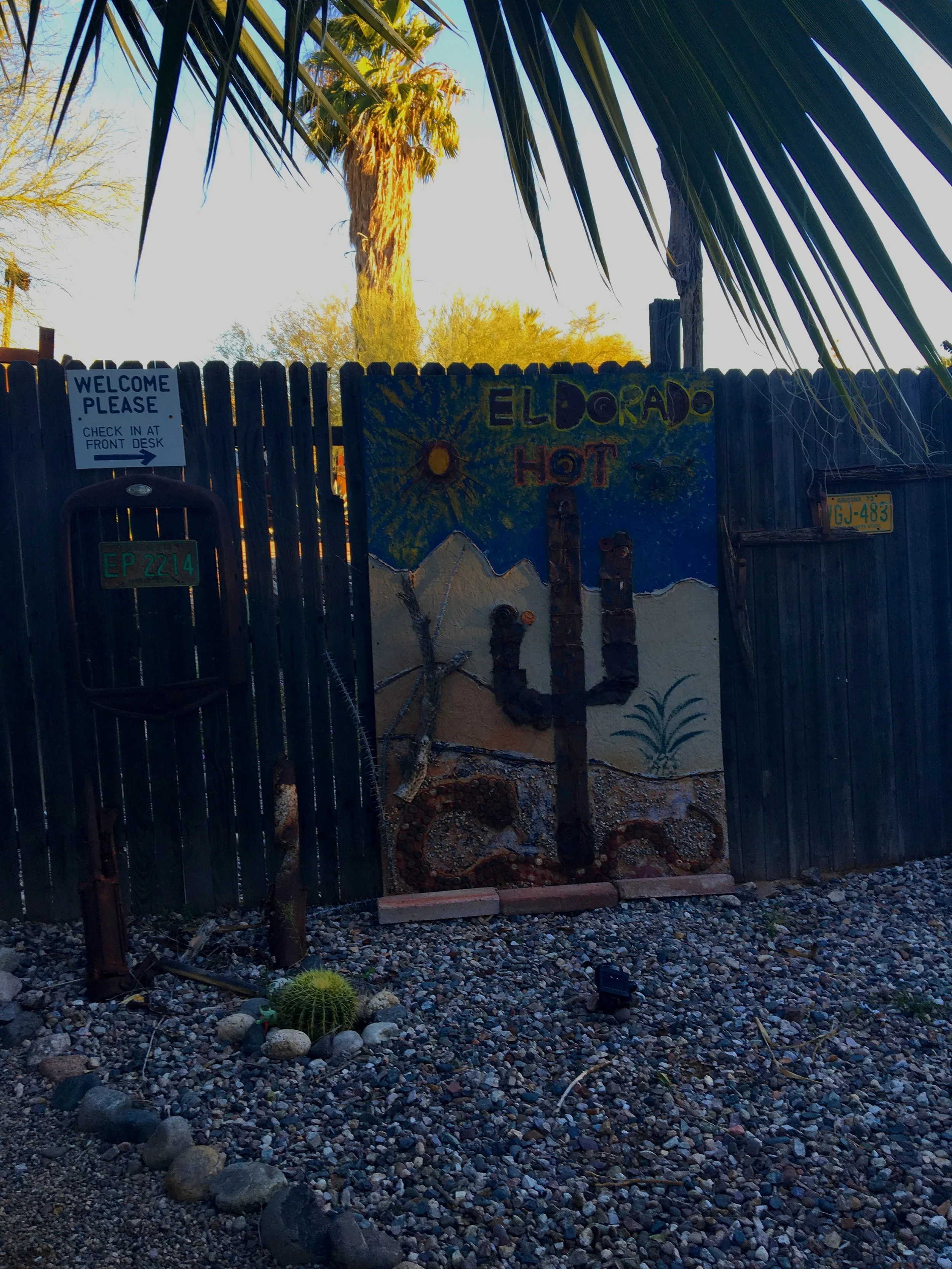
Another hand painted sing and weathered wood fencing reflecting the rustic character of El Dorado Hot Springs.
Know Before You Go
Location: El Dorado Hot Springs is located about an hour west of Phoenix in Tonopah, just off Interstate 10.
Getting there: The drive is straightforward, but the final stretch feels remote. A full tank of gas and water are recommended.
Reservations: Private soaking tubs and communal pools are available. Reservations for private tubs are recommended, particularly during the fall, winter, and spring months.
When to visit: Early mornings and evenings tend to be the calmest. Night soaks bring cooler temperatures and deeper quiet; daytime visits offer open sky and desert light.
What to expect: This is a rustic, outdoor hot spring. Facilities are maintained, but the experience is shaped by weather, wildlife, and the surrounding desert environment rather than controlled spa conditions.
What to bring: Water, sunscreen, and extra clothing for after soaking. Temperatures can shift quickly, especially after sunset.